
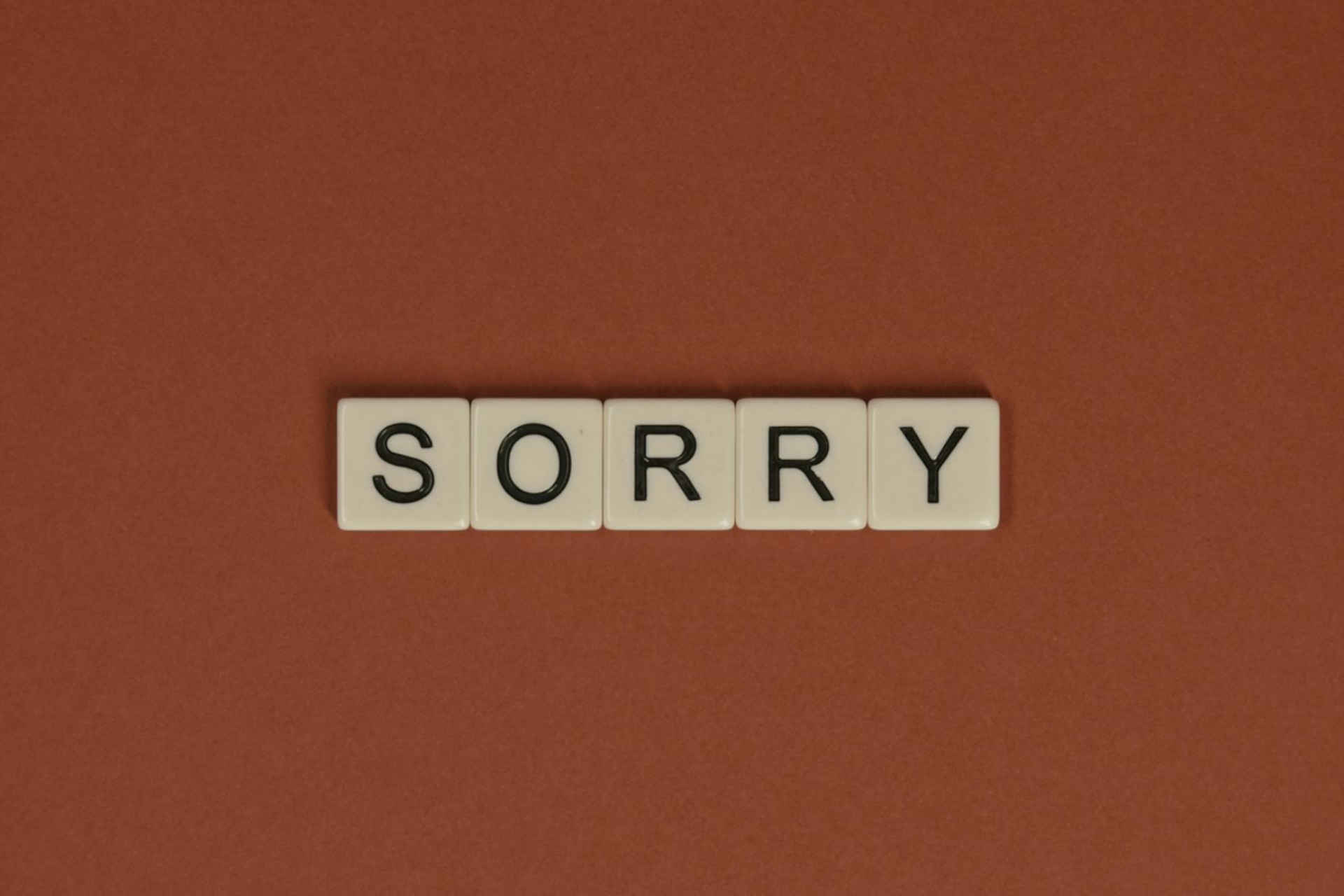
“Sorry” or “I didn't mean it that way” – really? Or rather, as people often apologize today: “Sorry, it's fine.” Or the official politician and manager statement: “If you felt offended, I apologize formally”.
A useful apology
This often sounds like a hedge: you apologize in case the other person felt that way. Some people hear it as, “I don't know if I did anything wrong – but if that's how you felt...”
But it could be so simple. A useful apology consists of three elements: first, a clear statement such as “I hurt you” or “I'm sorry”; second, an admission of responsibility such as “It was my fault” or “I didn't mean to”; and third, perhaps the question that hurts because it is honest: “What do you need now?”
Of course, there is a risk involved. If you apologize properly, you briefly lose control of the narrative. You can't bow down and be right at the same time. That's exactly why alibi apologies are so popular: they reassure the other person without leaving your comfort zone.
Perhaps that's where credibility is strongest: not in perfection, but in the willingness to truly stand up for your own imperfection.